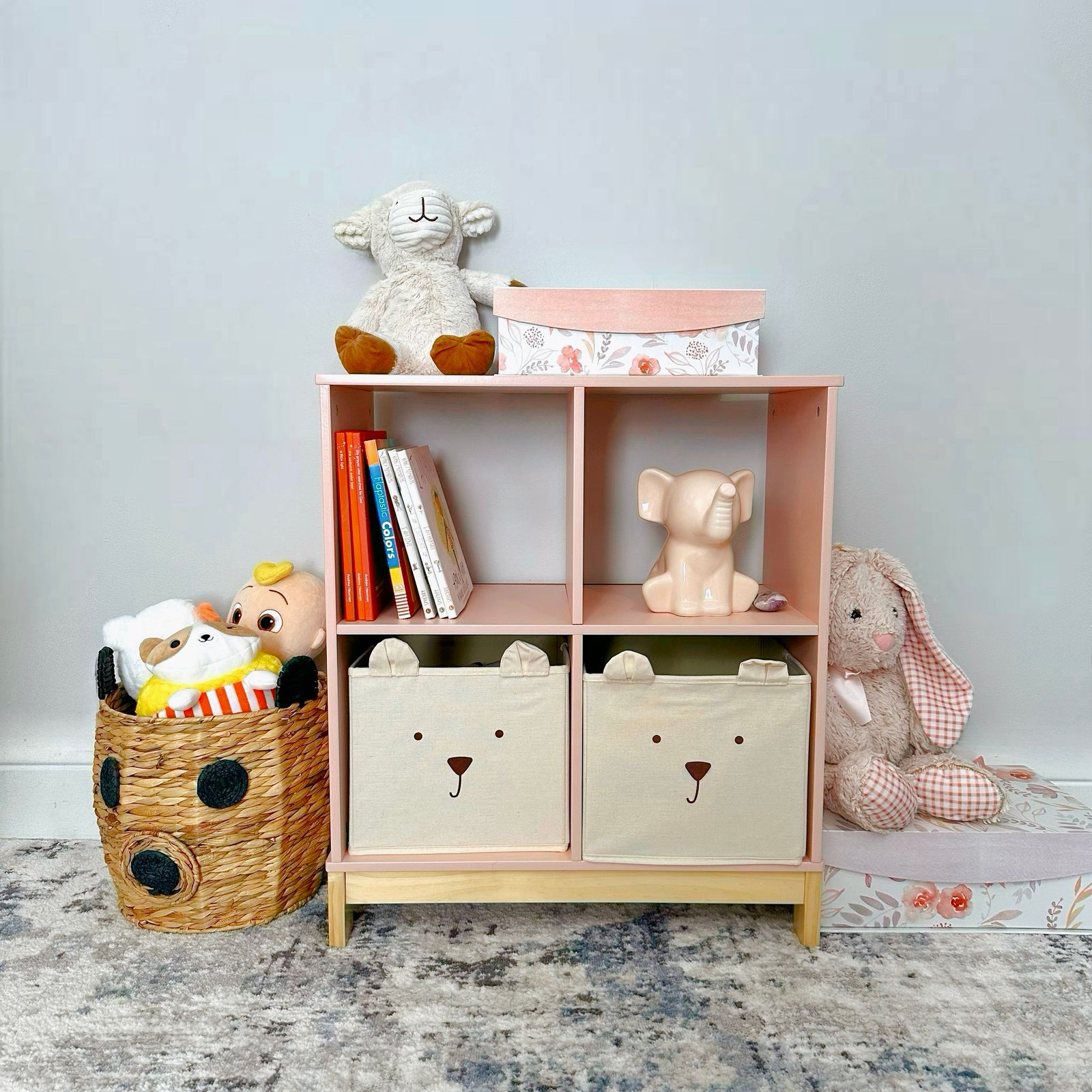
If your playroom feels chaotic no matter how often you tidy it, the problem is usually not mess. It is volume. When every toy is available at once, children graze rather than settle, tidying becomes overwhelming, and the room never feels calm for long. Toy rotation fixes this by keeping only a portion of the collection out at any time and cycling the rest in and out on a schedule.
Done well, rotation takes about twenty minutes a week, deepens play, and makes the room far easier to reset. Here is how to set it up and keep it running.
Why rotation works
Children play more deeply with fewer choices. Faced with a wall of options, attention scatters and nothing holds for long. Reduce the field and the remaining toys get used properly: blocks become elaborate builds, a single set of figures sustains a long story.
Rotation also makes returning toys feel new. A set that has been away for a month lands like a fresh arrival, which often revives toys your child had stopped noticing simply because they had become wallpaper.
And it makes tidying realistic. A room holding a quarter of the collection is one a child can actually reset themselves, which is the whole point of an organised playroom: not that you keep it tidy, but that they can.
Step one: sort the whole collection
Before you can rotate, you need to see everything you own. Gather every toy into one space and sort into broad categories. The exact categories matter less than being consistent, but a workable starting set is:
- Building and construction
- Pretend and small world
- Art and making
- Puzzles and games
- Books
- Active and physical
As you sort, pull out anything broken, incomplete, or clearly outgrown. Rotation only works if the pool is worth rotating; carrying broken or babyish toys through the cycle just wastes space and your time.
Step two: build balanced sets
Now divide each category roughly into thirds or quarters. The goal is several balanced sets, each containing a spread across categories, rather than one set of all the blocks and another of all the art supplies. Every active set should offer a building option, a pretend option, something creative, and something quiet, so whatever mood your child is in, the available toys can meet it.
Keep a few staples out permanently. Some toys are infrastructure rather than novelty: a favourite comfort toy, core building blocks, the current bedtime books. These need not rotate and can stay available all the time. Rotation is for the bulk of the collection, not every last item.
Step three: store the off-duty sets
Boxed-up sets need a home that is out of sight but easy to reach, because a system that is annoying to run is a system you will quietly abandon. A high shelf, the top of a wardrobe, or labelled tubs under a bed all work. Clear or labelled containers save you opening five boxes to find the one you want.
A few habits keep the stored sets healthy:
- Store sets complete, with all the pieces together, so a returning set is ready to play with immediately.
- Label by contents, not by date, so you can pull a specific kind of play when your child asks for it.
- Keep the storage near the playroom. Trips to the garage are how rotation dies.
Step four: set a rhythm and stick to it
The schedule matters less than the consistency. Pick a cadence you can sustain. Weekly suits younger children, whose interests move fast. Fortnightly works well for school-age kids. Even monthly is far better than never.
Anchor the swap to something you already do so it does not depend on memory. Sunday evening, alongside the weekly reset for the school week, is a natural slot. The whole job is quick: box up the current set, bring out the next, and do a fast tidy as you go. Twenty minutes, start to finish.
When you swap, change only most of the room rather than all of it. Leaving one or two familiar things out provides continuity, while the new arrivals provide novelty. A complete overhaul every single time can feel unsettling for some children.
Reading the signs
Rotation is not rigid. Let your child lead within the system.
- If a set is being ignored within a day or two, swap it early. There is no prize for sticking to the calendar.
- If a particular toy is driving deep, sustained play, hold it back from the next rotation and let the interest run.
- If your child asks for something specific that is in storage, get it out. Rotation should serve their play, not police it.
Watch what actually gets used over a few cycles. Toys that never earn attention in any rotation are candidates to pass on. The system doubles as a gentle, ongoing way to keep the collection honest, so it never creeps back to the overwhelming volume you started with.
The payoff
Within a few weeks you should notice play that lasts longer, a room that resets faster, and toys that feel fresh without anything new being bought. The collection stops growing into clutter because rotation makes its true size visible.
The aim of a playroom is not a space that is always tidy. It is a space your child can use deeply and reset themselves, where what is out is what is genuinely wanted. Twenty minutes a week of rotation gets you most of the way there, and it costs nothing but a little consistency.