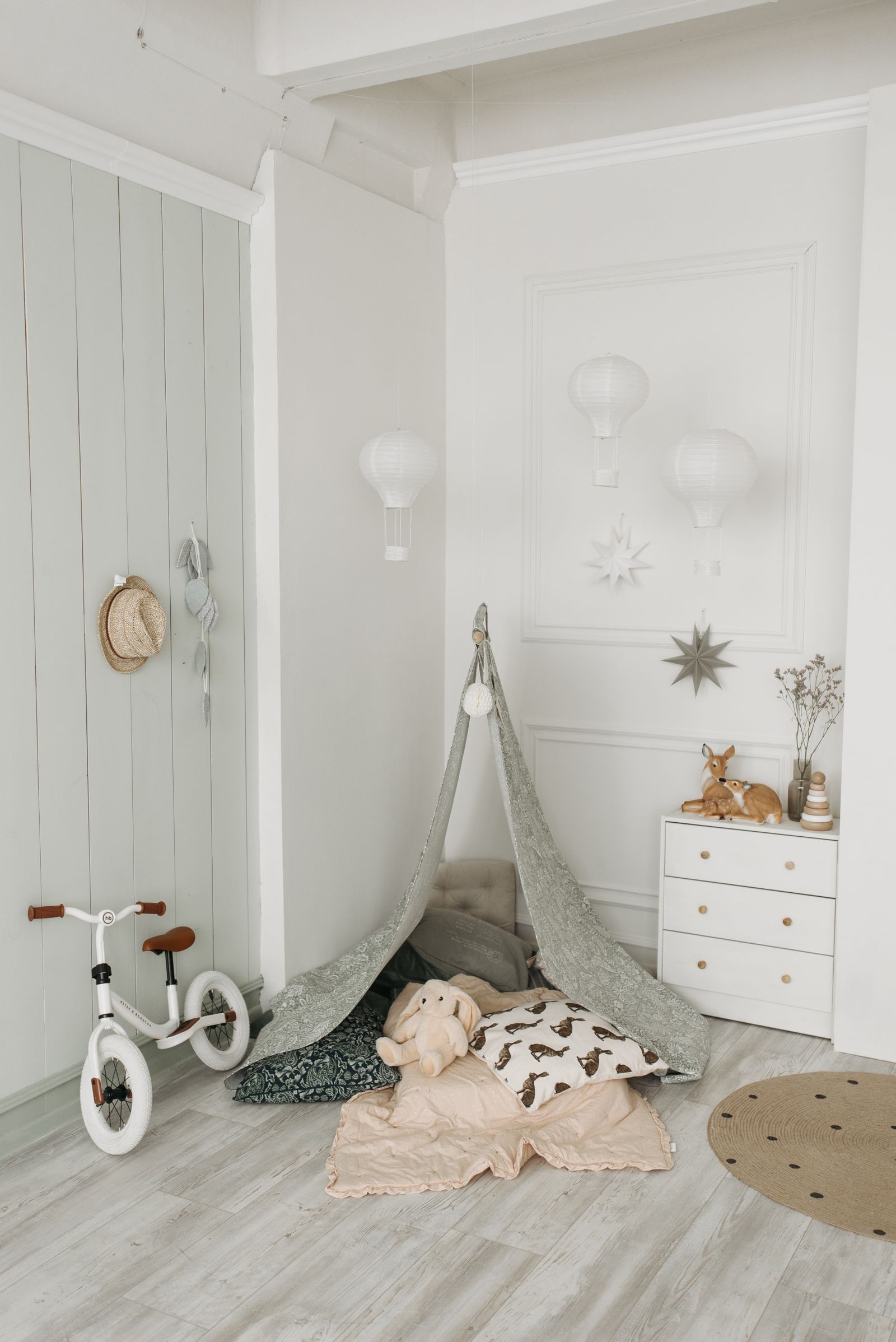
A calm corner is a small, comfortable spot where a child can take themselves to settle, rest, or simply be away from the busyness of the room. The idea is lovely in theory and often disappointing in practice: plenty of beautifully styled nooks sit empty because they were designed to look calm rather than to be used.
The difference between a corner that gathers dust and one your child genuinely retreats to comes down to a handful of practical choices. This guide covers them, so you build something that earns its place.
Pick the right spot
Location does most of the work. A calm corner needs to feel a little removed from the action, somewhere a child can step out of the flow without leaving the room entirely.
What to look for:
- A real corner. Two walls behind a child create an instinctive sense of enclosure and safety that the middle of a room never will.
- Away from the main thoroughfare. A spot people constantly walk past is not restful. Tuck the corner out of the traffic.
- Reasonable light, ideally natural. A dim, gloomy corner reads as unwelcoming. Near a window is ideal; otherwise plan for soft, warm light.
If you are short on space, a calm corner can be tiny. The sense of enclosure matters far more than the floor area, and some of the most-used nooks are barely more than a metre square.
Make the seating soft and enclosing
Seating is the heart of a calm corner, and the brief is specific: soft, a little enclosing, and clearly different from ordinary chairs. Children settle when their body feels supported and lightly contained, which is why a regular dining chair in a corner never becomes a retreat.
A soft, rounded pod seat suits this beautifully. Something like a Cloud Pod nook gives a child a cosy, slightly cocooning spot to sink into, which signals “this is a place to be still” far more effectively than upright furniture. The gentle enclosure is the whole point: it helps a restless child downshift without anyone having to ask.
If a dedicated seat is not an option, a thick floor cushion against the wall, a beanbag, or a pile of soft pillows can all do the job. The essentials are softness, support, and a clear contrast with the harder, busier seating elsewhere in the home.
Get the lighting right
Lighting sets the emotional temperature of the corner, and harsh overhead light undoes everything else you do. The goal is warm and soft, never bright and clinical.
- Warm over cool. Choose warm-toned bulbs; cool white light feels alert and stimulating, the opposite of what you want here.
- Soft and indirect. A small lamp, a string of warm fairy lights, or daylight through a sheer curtain all beat a ceiling downlight.
- Let your child control it where you safely can. A small lamp they can switch on themselves gives a sense of ownership that makes the corner feel like theirs.
Lighting is also how you make the corner feel distinct in a shared space. A pool of warm light in one corner naturally separates it from the brighter, busier rest of the room, no walls required.
Add only what helps
The strongest temptation is to over-fill a calm corner, which is exactly what stops it being calm. A few well-chosen items help a child settle; a pile of stuff turns the corner into more stimulation, defeating its purpose.
Keep to a short list:
- A handful of books, ideally rotated, kept where your child can reach them.
- One or two soft, quiet comfort items, such as a favourite soft toy or a small blanket.
- Perhaps one quiet, hands-on activity: a simple fidget, a sketchpad, or a set of cards.
Notice what is missing. Screens, noisy toys, and anything that lights up or makes sound belong elsewhere. A calm corner is defined as much by what you leave out as by what you put in. If in doubt, keep it sparse; you can always add later.
Help your child use it
A calm corner is a tool your child learns to reach for, and like any tool it works best when they understand it. The framing matters enormously: this is never a punishment spot or a place you send a child. It is a place they choose, a retreat that belongs to them.
A few ways to build the habit:
- Use it together early on. Read in the corner, rest there, model it as a nice place to be so it never carries any negative association.
- Name what it is for in plain terms: a place to go when feelings get big, when the room is too much, or when you just want some quiet.
- Let them lead. Give your child real agency over when and how they use the corner. Imposed, it becomes another instruction; offered, it becomes a resource.
Over time, many children learn to take themselves to the corner before a difficult moment escalates, which is precisely the self-regulation a calm corner is there to support. That habit is the real success, far more than how the corner photographs.
Keep it theirs
The last principle is the simplest: a calm corner belongs to your child, so let it reflect them. Within sensible bounds, let them choose the soft toy that lives there, the books on the little shelf, the way it is arranged. Ownership is what turns a styled corner into a genuine retreat.
Get the location, the soft seating, the warm light, and a short, well-chosen set of items right, then hand it over. Do that, and you will have built not a decorative nook but a quiet, dependable place your child actually goes when they need it.